
Hello, my name is Greg. I've been working in the arts in many capacities for over a decade. I've exhibited my work internationally, curated exhibits, installed work for galleries, institutions and private collecctors, shipped and crated works to every continant (besides antartica) and transported Picassos, Duchamps, Kent Monkmans, Michael Snows, etc... I've also done my fair share of working with recent grads just starting thier careers, emerging artists, and people working within the accessibility in the arts.
This work is all very rewarding, but as you can imagine, only some things go smoothly. I've dealt with art being infested with South American cockroaches, shady storage companies, artists' misconceptions of physics, walking into a gallery the day of the show and finding it flooded, getting stiffed on payments from galleries and collectors, labour law violations, you name it.
This website will give you practical advice and serve as a resource I wish I had when I first got out of school. I couldn't figure out a damn thing about how to do the job that I had just spent four years in a BFA program learning how to do (even after having taken a professional practice class). It won't tell you how to have a long-lasting career in the arts or how to make it so you won't have to check your bank account before you buy groceries, but it will save you the panicked scramble of getting your first out-of-town show, and then realizing that you have no idea how to get your stuff there.
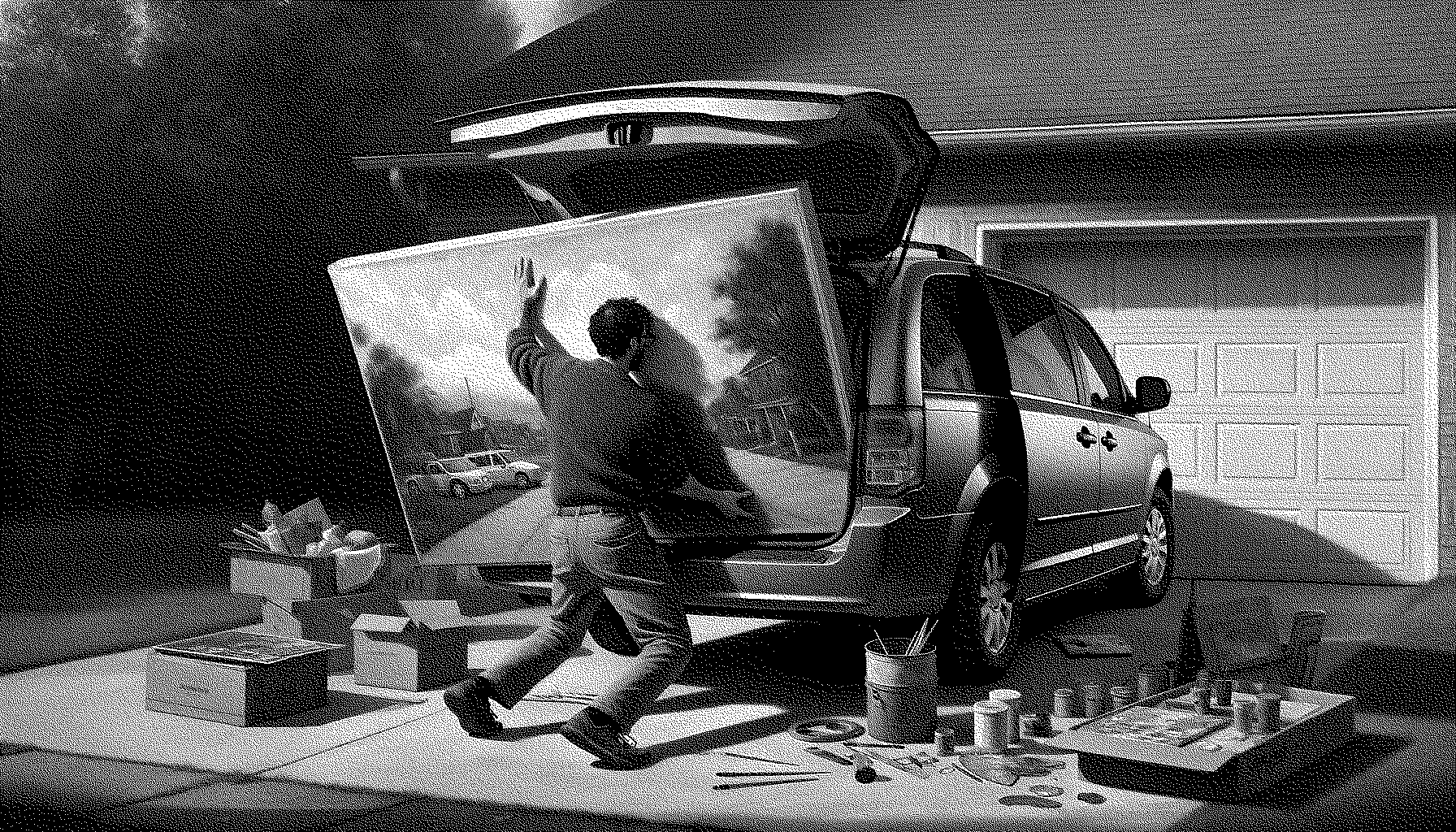
this image is how chat GPT imagines the process. We see the artist trying to put a painting that “doesn’t look that big” into a Dodge Caravan. These vehicles are widely believed to fit all objects made by humankind. We will be working over the next several steps to dispel these illusions.
Rest assured, you’re not the first one to come across this. Countless people before you have had this problem. They’ve graduated with a BFA or an MFA and have been educated to the nines about how to create interesting and thought-provoking art, but are struggling with the fact they have never been prepared for the fact that like it or not, their anticapitalist musings on the history of photography and culture, are about to run up against the cruel world of running a small business. This is fine, but We’ll have to prepare you to deal with this absolute bummer of a reality.
This site will work like a crash course for you on how to get through this. You’ve got enough on your mind, and if this can help a bit and get you back to the things you actually got into art for, that is all the better.
We will cover nine steps from the beginning to the end to ensure you’ll be okay — the best I can promise is okay.
Along the way, we will meet three groups of people: the art handlers, the art shippers, and the receiver of the artwork. I’ve prepared some images of what an AI thinks they all look like.
The receiver of the artwork is generally the most excited and confused person about the process. They are usually the gallery or a collector and are glad to see your art arrive. Universities are often a little more tired and will bring forth mountains of paperwork to be signed. This should be expected.
This is where my current job is. Art Handlers are those employed by galleries or shippers who do the on-the-ground labour. We'll install it, pack it, drive it, and do pretty much whatever you need. It is essentially a preparator job in an institution but with more off-site activity. If you get a good art handler, they can install your projectors, build supports and even fix frames... This is only sometimes the case.
These are the walking balls of stress and nicotine that are responsible for making sure the art actually gets where it needs to go. Usually, the owners of these companies start as couriers/art handlers and build up the business without having business training. They are difficult, usually surly, and unless they are based out of Montreal, they are generally very unpleasant to spend a long time with. It is recommended that you avoid the owners of the companies whenever possible.
The employees are usually significantly more relaxed and are nice people. If you are dealing with a shipper at a photo lab, they will generally be some of the nicest people in the industry. However, they usually have a pretty insane job because you are combining the fast, pace and high-volume world of print with the uppity and intense art world. Be kind to them. If you ever have a huge order at a lab or something in-depth that is outside the norm (think a 60' Micheal Snow print on fujiflex that needs to get to China), bring the staff some beer or donuts. The world will thank you for it.